There are no items in your cart
Add More
Add More
| Item Details | Price | ||
|---|---|---|---|
July, 2026
Author:Team Rodha

Every year, thousands of MBA aspirants compare different CAT online coaching institutes before enrolling. Most students begin by evaluating factors such as fees, faculty profiles, batch timings, and previous results. While these comparisons are useful, they rarely provide a complete picture of the learning experience. Many important features that influence your preparation only become visible after you join a program.
Preparing for CAT requires consistent effort over several months rather than a few weeks of intensive study. Completing the syllabus is only one part of the journey, while revision, mock analysis, mentorship, and doubt support determine how effectively you improve. A coaching institute should help you stay disciplined, identify weaknesses, and refine your strategy as the exam approaches. This is why choosing the right CAT online coaching requires looking beyond marketing claims.
Many students realise this difference only after they have already enrolled in a course. They discover that regular guidance, structured planning, and timely feedback matter just as much as classroom teaching. A well-designed learning ecosystem helps students remain motivated even during difficult phases of preparation. These factors often make the difference between average and exceptional CAT performance.
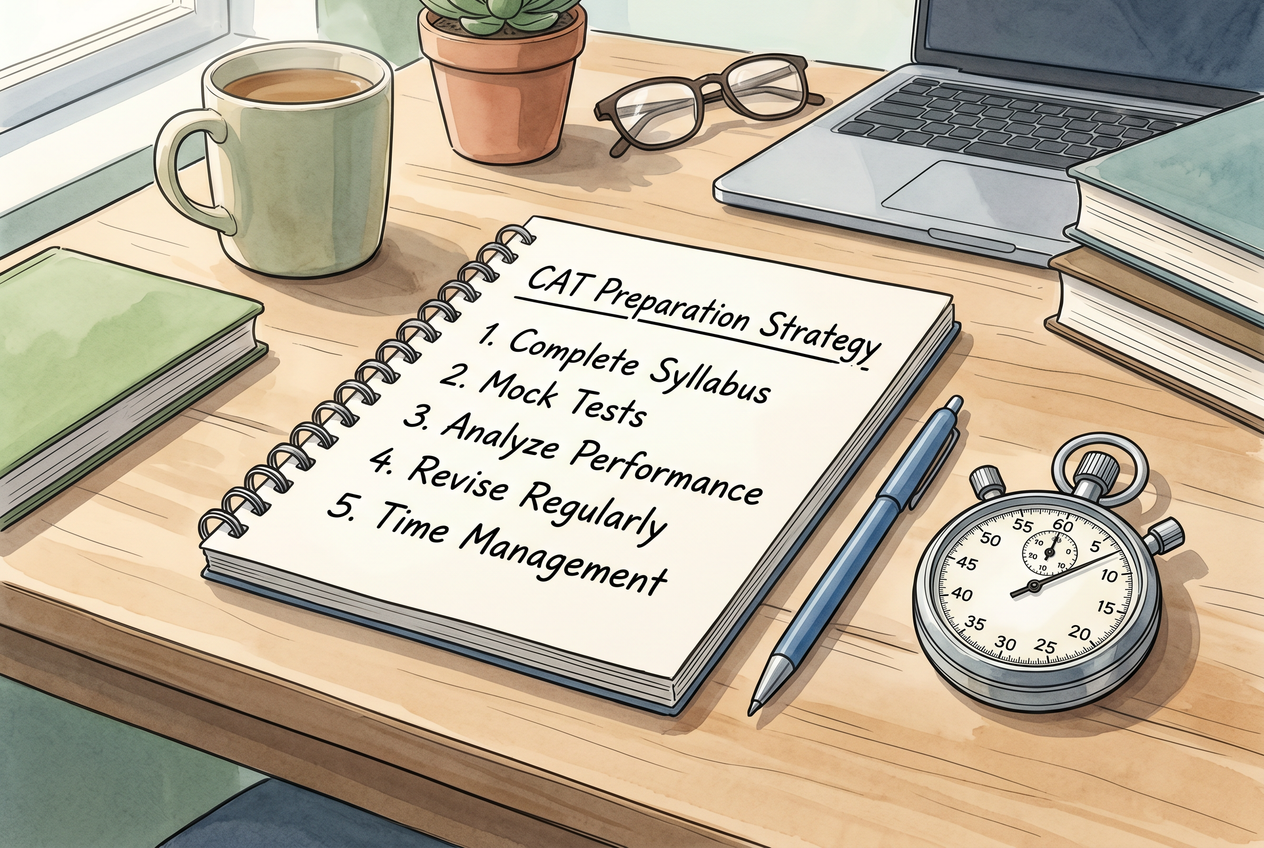
Most students compare coaching institutes based on faculty profiles, fees, and study material. While these factors are important, they don't tell the complete story.
The overall learning experience depends on several other features that directly influence consistency, confidence, and exam performance. Before enrolling, make sure you evaluate these ten aspects carefully.
A structured roadmap is one of the biggest indicators of quality CAT online coaching. Instead of covering topics randomly, good coaching institutes follow a sequence where every lesson builds naturally on previous concepts. Students first develop strong fundamentals before moving towards advanced applications and exam-level questions. This gradual progression makes learning more organised and easier to retain.
A planned academic schedule also ensures that every section of the CAT receives equal attention throughout the course. Quant, VARC, and DILR are introduced at the right pace without rushing through difficult topics. Students get enough time to practise, revise, and strengthen concepts before moving ahead. As a result, preparation feels more balanced and less stressful.
Most coaching institutes offer regular mock tests as part of their preparation program. However, taking mocks alone does not guarantee improvement in your CAT score. Students benefit only when they understand why they performed well or where they made mistakes. This is where detailed mock analysis becomes extremely valuable.
A good mock review explains much more than your final score or percentile. It helps you identify questions that should have been attempted, questions that should have been skipped, and areas where unnecessary time was lost. Faculty should also explain whether mistakes were conceptual, strategic, or simply careless. These insights help students improve with every successive mock.
Over time, students begin recognising recurring patterns in their preparation through consistent mock analysis. Some may discover that they spend too much time on difficult questions, while others may realise they attempt too few questions despite good accuracy. Identifying these habits allows students to make informed changes to their exam strategy. This gradual refinement often leads to significant score improvements.
Every CAT aspirant wants to improve speed while solving questions during the exam. This is why shortcut techniques often attract a great deal of attention during preparation. Although shortcuts can be useful, they are effective only when students understand the concepts behind them. Without conceptual clarity, even the fastest methods become difficult to apply correctly.
Experienced faculty focus on building strong fundamentals before introducing quicker solving techniques. They explain why a particular method works, when it should be used, and where its limitations lie. This approach allows students to tackle unfamiliar questions with confidence instead of relying entirely on memorised tricks. Many of the most effective CAT preparation tips are rooted in conceptual learning because it improves long-term retention across different topics.
Many students assume learning happens only during scheduled classroom sessions. In reality, most doubts appear later while solving assignments, revising notes, or analysing mock tests independently. Quick and effective doubt resolution helps students overcome these challenges without interrupting their preparation. It also prevents small conceptual gaps from becoming larger problems over time.
Before joining a coaching institute, understand how student doubts are handled throughout the course. Find out whether there is a dedicated doubt portal, live doubt sessions, or direct faculty interaction. You should also ask how quickly students can expect responses after submitting their queries. These systems often reveal how much importance the institute places on continuous learning.
Every CAT aspirant has a different preparation journey and faces unique challenges along the way. Some struggle with time management, while others find VARC more difficult than Quant. Many students also lose marks because of poor question selection despite having strong conceptual knowledge. These individual problems require personalised guidance rather than general classroom instruction.
Good mentorship helps students understand both their strengths and areas that need improvement. Regular mentor interactions provide an opportunity to discuss mock performance, preparation strategies, and overall progress. Instead of offering generic advice, experienced mentors recommend practical changes based on individual learning patterns. This makes preparation much more focused and efficient.
Completing the syllabus is only the first step in CAT preparation. Without regular revision, students gradually forget concepts and struggle to apply them during mock tests.
This is why the best CAT online courses build revision into the academic schedule instead of leaving it entirely to students. Consistent revision strengthens concepts, improves retention, and boosts confidence over time. A well-planned revision system should include:
Instead of revisiting everything only before the exam, students revise important concepts throughout the course. This reduces the pressure of last-minute preparation and ensures previously covered topics remain fresh. It also helps students identify weak areas early and improve them before they become major obstacles.
Many students naturally spend more time on subjects they enjoy while avoiding sections they find difficult. Over several months, this imbalance can affect overall performance because CAT rewards consistency across Quant, VARC, and DILR. A good CAT online coaching program ensures that students prepare for all three sections in a balanced manner, often supplementing classroom learning with resources like a CAT VARC preparation playbook to strengthen reading comprehension and verbal ability. This helps students build well-rounded skills instead of relying on one strong section.
Experienced faculty monitor student performance across all subjects and encourage them to strengthen weaker areas. Regular sectional tests make it easier to identify topics that require additional attention before they become major weaknesses. Faculty can also recommend personalized practice plans based on individual performance. This balanced approach improves confidence across the entire exam.
Choosing the right coaching institute is about finding a program that supports you consistently from your first class until the CAT exam. Rodha's CAT online coaching is designed around this philosophy by combining structured learning, experienced faculty, regular practice, and continuous mentorship. Every stage of the preparation journey is planned to help students strengthen concepts, improve problem-solving skills, and build confidence over time.
Students learn through live interactive classes where faculty focus on conceptual clarity before introducing exam-specific strategies and shortcuts. Regular sectional tests, full-length mock exams, and detailed mock analysis help students identify recurring mistakes and refine their approach with every assessment. Dedicated doubt-solving support ensures that conceptual gaps are addressed quickly, allowing students to maintain steady progress throughout the course.
Explore all our CAT courses here!
Look beyond fees and faculty credentials. Evaluate factors such as the course structure, mock analysis, revision planning, doubt-solving support, mentorship, classroom interaction, and performance tracking to understand how the program will support your preparation over several months.
Live classes offer opportunities to ask questions, interact with faculty, and receive immediate clarification on difficult concepts. Recorded lectures are useful for revision, but a combination of live learning and recorded access generally provides a more effective learning experience.
Mock tests are essential because they help students understand the actual exam pattern, improve time management, and evaluate their preparation. However, the biggest improvement comes from analysing every mock in detail and using those insights to refine your strategy before the next test.